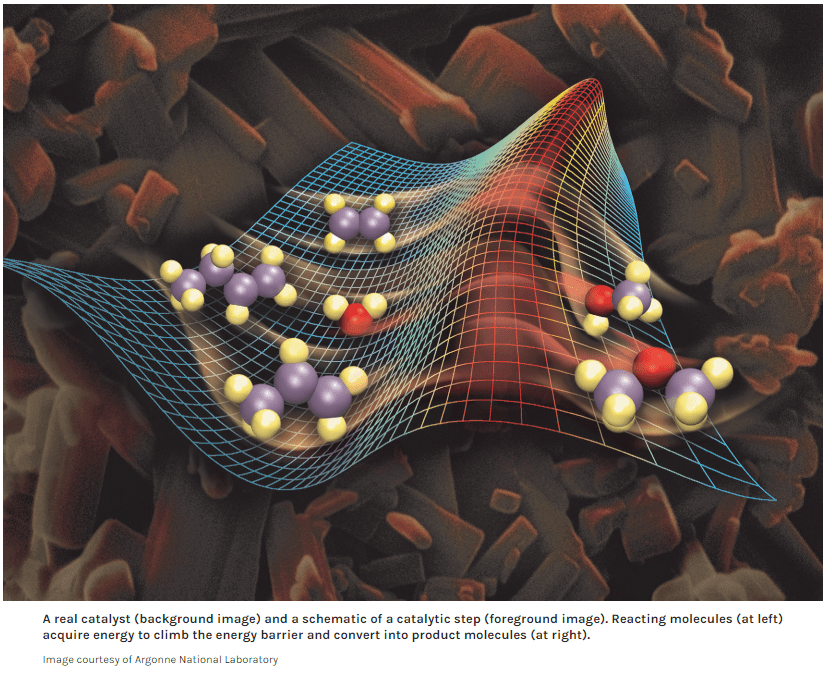
In the refinery and petrochemical industry, catalysts play a crucial role in various processes by accelerating chemical reactions and improving the efficiency of production. Catalysts can be used in different stages of petrochemical production, from the initial refining of crude oil to the synthesis of various chemical compounds. Here are some common catalysts used in these industries:
- Hydroprocessing Catalysts: These catalysts are used in hydroprocessing units such as hydrotreating and hydrocracking. They are typically composed of metals like nickel (Ni), cobalt (Co) and molybdenum (Mo) supported on materials like alumina or zeolites. Hydroprocessing catalysts help remove impurities from feedstocks, such as sulfur, nitrogen, and metals, to produce cleaner fuels and other refined products.
- Fluid Catalytic Cracking (FCC) Catalysts: FCC catalysts are widely used in the fluid catalytic cracking process, which converts heavy hydrocarbon fractions into lighter, more valuable products such as gasoline, diesel, and other valuable petrochemicals. These catalysts are typically composed of zeolites, such as faujasite or zeolite Y, combined with additives like silica-alumina. They promote the cracking reactions and enhance the selectivity of desired products.
- Reforming Catalysts: Reforming catalysts are employed in the catalytic reforming process to convert naphtha into high-octane gasoline components and aromatics. They often consist of platinum (Pt) or platinum-rhenium (Pt-Re) on a solid support material, such as alumina or silica-alumina. These catalysts facilitate the rearrangement of hydrocarbon molecules to produce branched, cyclic, and aromatic compounds.
- Alkylation Catalysts: Alkylation catalysts are used in the alkylation process to combine light olefins, like propylene or butylene, with isobutane to produce high-octane gasoline components. Common catalysts for alkylation include hydrofluoric acid (HF) and sulfuric acid (H2SO4). These strong acids act as catalysts by promoting the reaction between the olefins and isobutane.
- Olefin Metathesis Catalysts: Olefin metathesis catalysts are used in petrochemical processes to rearrange the carbon-carbon double bonds in olefin molecules. These catalysts, often based on transition metals like molybdenum or ruthenium, enable the production of specialty chemicals and polymers through olefin cross-metathesis, ring-closing metathesis, or other related reactions.
- Oxidation Catalysts: Oxidation reactions are crucial in the production of various petrochemicals, including alcohols, ketones, and organic acids. Catalysts based on metals like platinum, palladium, or vanadium are commonly used to facilitate these reactions.
- Dehydrogenation Catalysts: Dehydrogenation is a process used to remove hydrogen from hydrocarbon molecules to produce olefins (such as ethylene and propylene). Catalysts like platinum, chromium oxide, or mixed metal oxides are employed to promote this reaction.
- Polymerization Catalysts: Polymerization is the process of combining monomers to form polymers. In the petrochemical industry, catalysts like Ziegler-Natta catalysts or metallocene catalysts are employed to produce a wide range of polymers such as polyethylene and polypropylene. These catalysts are typically based on transition metals like titanium or zirconium.
Petroleum refining catalysts can become deactivated over time due to various reasons such as fouling, poisoning, or physical degradation. When a catalyst is deactivated, its performance in promoting desired chemical reactions decreases, leading to lower yields and decreased product quality. To address this issue, there are several methods used to reactivate petroleum refining catalysts:
- Regeneration: Regeneration involves restoring the activity of the catalyst by removing the accumulated contaminants. The regeneration process depends on the type of catalyst and the nature of the deactivating species. It may include steps like thermal treatment, chemical washing, or a combination of both.
- Acid washing: Acid washing is a common method to remove deposits or fouling on the catalyst surface. The catalyst is treated with an acid solution, such as hydrochloric acid or sulfuric acid, to dissolve and remove the accumulated impurities. Acid washing is often followed by rinsing and drying steps.
- Steam stripping: Steam stripping is employed to remove volatile impurities from the catalyst. The catalyst is exposed to high-temperature steam, which helps to vaporize and carry away the unwanted substances from the catalyst surface. This method is particularly effective for removing light hydrocarbons and volatile organic compounds.
- Decoking: Decoking is specifically used for catalysts that are used in processes where coke formation occurs. Coke is a carbonaceous residue that builds upon the catalyst surface, inhibiting its activity. Decoking involves subjecting the catalyst to high temperatures in the presence of steam or air, which oxidizes and removes the coke deposits.
- Ultrasonic cleaning: Ultrasonic cleaning utilizes high-frequency sound waves to generate microscopic bubbles in a liquid medium. When these bubbles collapse near the catalyst surface, they create intense localized agitation, dislodging and removing contaminants. Ultrasonic cleaning is effective for removing loosely bound deposits.
- Acid leaching: Acid leaching is employed when the catalyst is poisoned by metal impurities. The catalyst is treated with a dilute acid solution that selectively dissolves the metal contaminants while leaving the catalyst intact. This method is commonly used for catalysts used in hydrotreating processes.
The specific deactivation and reactivation methods may vary depending on the type of catalyst, the refining process, and the nature of the contaminants. The catalyst manufacturer’s guidelines and industry best practices should always be followed when deactivating and reactivating petroleum refining catalysts.
Aysel Zahidova
 TOMRIS
Yorum bırakın