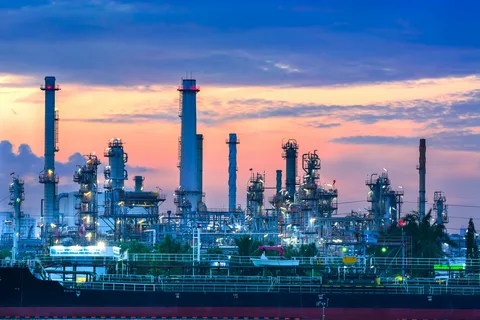
The oil and gas industry has long been a cyclical industry driven by the global price of hydrocarbons. But even by industry standards, the volatility of the past few years has been unprecedented. The cycle times between highs and lows have compressed and the transition to lower carbon energy and fuels adds an additional layer of complication for oil and gas companies.
In response to these challenges, many oil and gas companies are diversifying their portfolios and investing in renewable energy sources such as wind, solar and hydrogen. Some are also exploring new business models such as energy storage and carbon capture technology.
The transition to lower carbon energy presents both opportunities and risks for the industry. On the one hand, there is growing demand for cleaner energy sources and technologies, providing new revenue streams for companies that are able to adapt. On the other hand, the transition may lead to stranded assets and a decline in demand for fossil fuels, requiring companies to rethink their strategies and business models.
Overall, the oil and gas industry faces complex challenges in the coming years. Companies that are able to navigate this transition successfully will need to be agile, innovative and adaptable to changing market conditions and evolving consumer preferences.
In the short term many countries turned to dirtier sources of energy such as coal, but the war has put greater scrutiny on relying on fossil fuels from foreign regimes and may lead to a faster energy transition to more renewable and cleaner sources of energy.
So what are the trends for oil and gas professionals to watch out for in 2023?
Operational Excellence Becomes Ever More Important in 2023
As businesses become more competitive and the expectations of customers continue to rise, operational excellence will become even more important in 2023. This means that organizations will need to focus on optimizing their processes, reducing waste, improving quality, and enhancing their overall efficiency.
Oil and gas companies will need to do more with existing assets and operations and fewer people, as labor stays scarce and investment is cautious. Thoughtful optimization and automation of key processes, digital transformation, and continual improvement in operations will be key to delivering affordable, reliable sources of energy.
One of the key drivers behind this trend is the increasing pace of technological innovation, which is changing the way that businesses operate and interact with their customers. As new technologies such as AI and machine learning become more prevalent, organizations will need to embrace these technologies in order to remain competitive and meet the evolving needs of their customers.
In addition, the growing importance of sustainability and environmental responsibility will also play a role in driving the need for operational excellence. As customers and stakeholders become more aware of the impact that businesses have on the environment, organizations will need to find ways to reduce their carbon footprint and minimize their impact on the planet.
Ultimately, the pursuit of operational excellence will be a key factor in enabling businesses to meet the challenges of the rapidly evolving business landscape in 2023 and beyond. By focusing on improving their operational efficiency, businesses will be able to deliver better products and services, reduce costs, and remain competitive in an increasingly crowded marketplace.
Digital Twins & Artificial Intelligence Dominate the Technology Agenda
One way in which digital technology is transforming oil and gas operations is through the use of sensors and remote monitoring systems. These systems can be used to monitor equipment health and detect potential issues before they cause problems or downtime. They can also be used to track oil and gas production and provide real-time data on reservoir performance.
Data analytics and machine learning are also playing an increasingly important role in the oil and gas industry. These technologies can be used to analyze vast amounts of data and identify patterns and trends that would be difficult or impossible for humans to spot. This information can be used to optimize production and improve efficiency.
Another key area where digital technology is transforming oil and gas operations is through the use of drones. Drones can be used to inspect facilities and pipelines, survey oil and gas fields, and perform other tasks that would be difficult or dangerous for humans. This can help companies improve safety while reducing costs and improving efficiency.
Overall, digital technology is transforming the oil and gas industry in numerous ways. By leveraging the power of automation, data analytics, and machine learning, companies can reduce costs, improve efficiency, and operate more safely and reliably. As technology continues to evolve, it is likely that we will see even greater transformation in this industry in the years to come.
New Urgency: Reducing Methane Emissions
As global warming leads to more extreme weather, reducing methane emissions has become an increasingly urgent issue. Methane is a potent greenhouse gas that is about 84 times more effective than carbon dioxide in trapping heat in the atmosphere over a 20-year period.
Some of the largest sources of methane emissions are from the energy sector, including oil and natural gas production, coal mining, and large-scale livestock operations. The agriculture and waste management sectors are also significant sources of methane emissions.
To address this issue, governments and businesses are taking action to reduce methane emissions. For example, the Biden administration in the United States has proposed new regulations to reduce methane emissions from oil and gas operations. The European Union is also taking action, pledging to cut methane emissions by at least 30% by 2030.
In addition, companies are investing in new technologies to reduce methane emissions, such as advanced leak detection systems and methane-capture equipment. Some companies are also exploring alternative feed options for livestock to reduce methane emissions from agriculture.
Reducing methane emissions is a critical part of addressing climate change and preventing the most severe impacts of global warming. By taking action to reduce methane emissions, governments and businesses can help to limit the extent of future climate change and protect our planet for future generations.
 TOMRIS
Yorum bırakın